Tag Archives: Peak Window Cleaning

Elevate Your Space: The Benefits of High Interior Dusting and Cleaning Services

In the hustle and bustle of daily life, maintaining a clean and healthy living or working environment often takes a backseat. One aspect that is frequently overlooked is high interior dusting and cleaning services. While regular cleaning of low surfaces is essential, the often-neglected areas above eye level can accumulate dust and grime, affecting both the aesthetic appeal and the overall well-being of a space.

But first, what is high cleaning? 

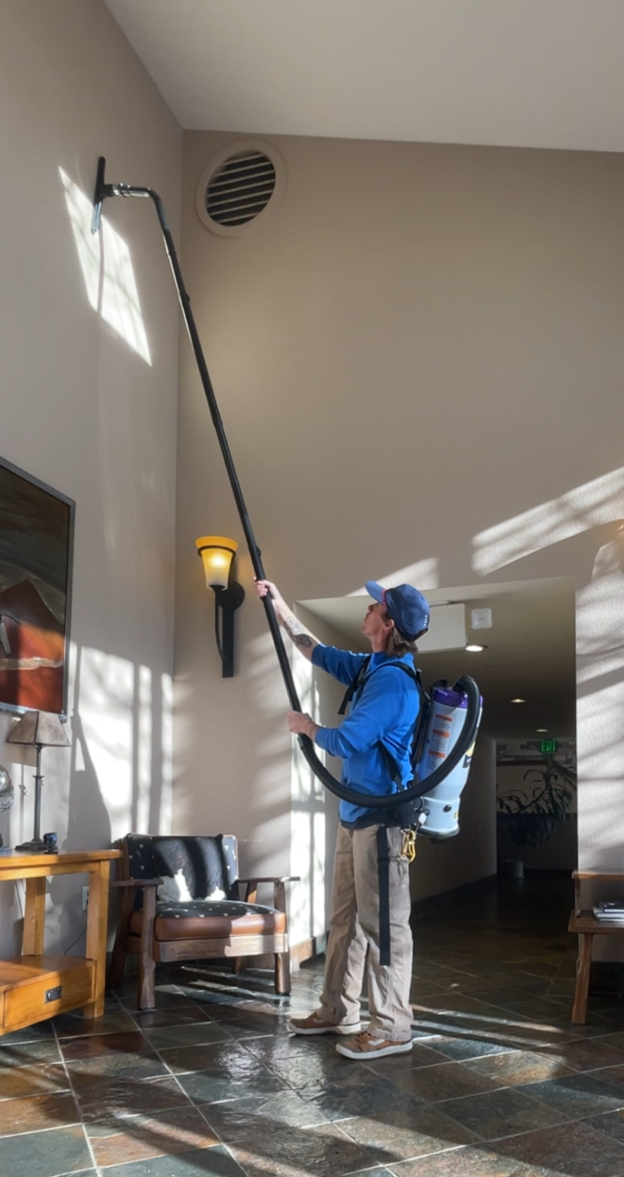
High Cleaning is cleaning surfaces that cannot be reached from the floor without ladders or other special equipment. We usually use one of two methods, ladders and extended reach vacuuming. Ladders, for example, are great for getting up close to a ceiling fan and getting all the areas that a pole wouldn’t. Vacuuming from the ground allows us to easily clean ceilings and beams. 

Why do high cleaning? 

Most surfaces that you can easily reach in your home are usually cleaned or dusted on a regular basis. A vaulted ceiling, beams, fans, ledges and sills, fireplaces, and light fixtures are often inaccessible and are often overlooked, until you see them from a staircase or landing! Dust particles, allergens, and pollutants tend to settle on elevated surfaces over time. High interior dusting targets these hard-to-reach areas, reducing the concentration of airborne particles which can be very detrimental to your air quality. Dust can easily cause respiratory issues and trigger allergies and asthma. Dust mites are also up there and should definitely be considered. We use a commercial grade vacuum with a HEPA filter to contain dust. Where this is not practical, hand dusting is used. Where applicable, drop clothes are used to capture falling dust, such as a dust bunny infested ceiling fan! 

Let’s explore the benefits of high interior dusting and cleaning services and why investing in them can transform your environment.

1. **Improved Indoor Air Quality:**

This not only enhances the air quality but also contributes to a healthier living or working space. Improved air quality can lead to a decrease in respiratory issues and allergies, creating a more comfortable and safe environment for occupants.

2. **Preservation of Aesthetic Appeal:**

Overlooking high surfaces during regular cleaning routines can result in a dull and unkempt appearance. Dust accumulation on light fixtures, ceiling fans, crown molding, and other elevated surfaces can diminish the overall aesthetic of a room. High interior dusting and cleaning services restore the shine and beauty of these often-neglected areas, providing a fresh and well-maintained look to your space.

3. **Extended Lifespan of Fixtures and Furnishings:**

Dust isn’t just an eyesore; it can also damage your fixtures and furnishings over time. The abrasive nature of dust particles can wear down surfaces, leading to premature aging and degradation. By investing in high interior dusting, you’re not just cleaning for appearances but also extending the lifespan of your valuable assets. This preventative measure can save you money in the long run by reducing the need for premature replacements or extensive repairs.

4. **Enhanced Productivity and Well-Being:**

A clean and organized environment has a direct impact on the well-being and productivity of its occupants. High interior dusting and cleaning services create a more pleasant and comfortable space, promoting a positive atmosphere. Reduced allergens and pollutants contribute to the overall health of individuals within the space, fostering a conducive environment for both work and relaxation.

Conclusion:

Investing in high interior dusting and cleaning services is not just about maintaining appearances; it’s about creating a healthier, more comfortable, and aesthetically pleasing environment. From improving indoor air quality to preserving the longevity of fixtures, the benefits extend far beyond the surface level. Elevate your space by incorporating high interior cleaning into your regular maintenance routine, and experience the transformative impact on both your living and working environments.

Professional cleaning services possess the knowledge, experience, and tools necessary to tackle these hard-to-reach areas safely and efficiently. Take care of your environment by outsourcing your high interior cleaning needs, you can rest assured that every nook and cranny is addressed, leaving your space pristine and allergen-free.

Try Peak Window Cleaning’s High Cleaning service and have your home clean from top to bottom today!   
Monsoon Season & the Best Time to Clean Your Windows and Gutters in Colorado

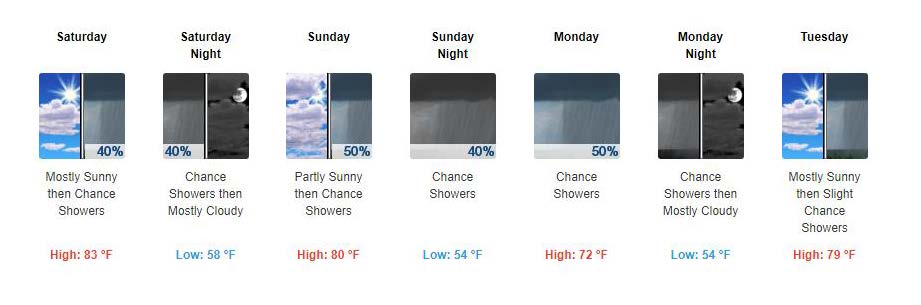
This time of year in Colorado is considered monsoon season and we can expect afternoon storms on a daily basis. A monsoon is a large wind change that brings lots of moisture from the Pacific Ocean and the California Gulf.

In Colorado, monsoon season usually starts in July and lasts through August. It’s when afternoon thunderstorms are most frequent and severe. Monsoon storms tend to develop in the mountains and drop down into the plains. The storms are typically slow moving and produce heavy rains, which can cause flash floods.

Example forecast for July/August in Colorado.

So how does this season affect your windows? A good clean rain won’t mess up windows, but if the rainfall picks up dirt from somewhere such as the roof, gutters, trees over the house, or splashes up from the ground, it will. So it depends on how big the overhangs are on the house for the most part and whether it’s a driving rain with wind.

We recommend scheduling a gutter cleaning, so the excess debris can be cleaned out. That will help reduce the chance of the gutters overflowing and getting debris on the windows. A great part about Peak Window Cleaning gutter cleaning service is that roof debris is also cleaned off, which helps keep your windows cleaner during the monsoon season.

Looking to learn more about Colorado’s monsoon season? Check out this great video from KOAA: Monsoon Season is Arriving: What does it mean for you?

What is a Broken Window Seal?

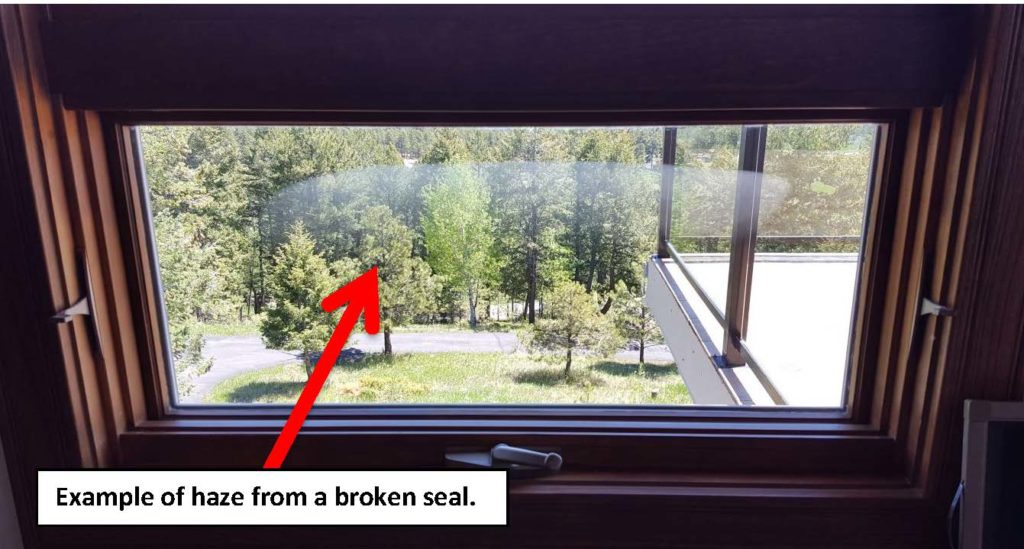
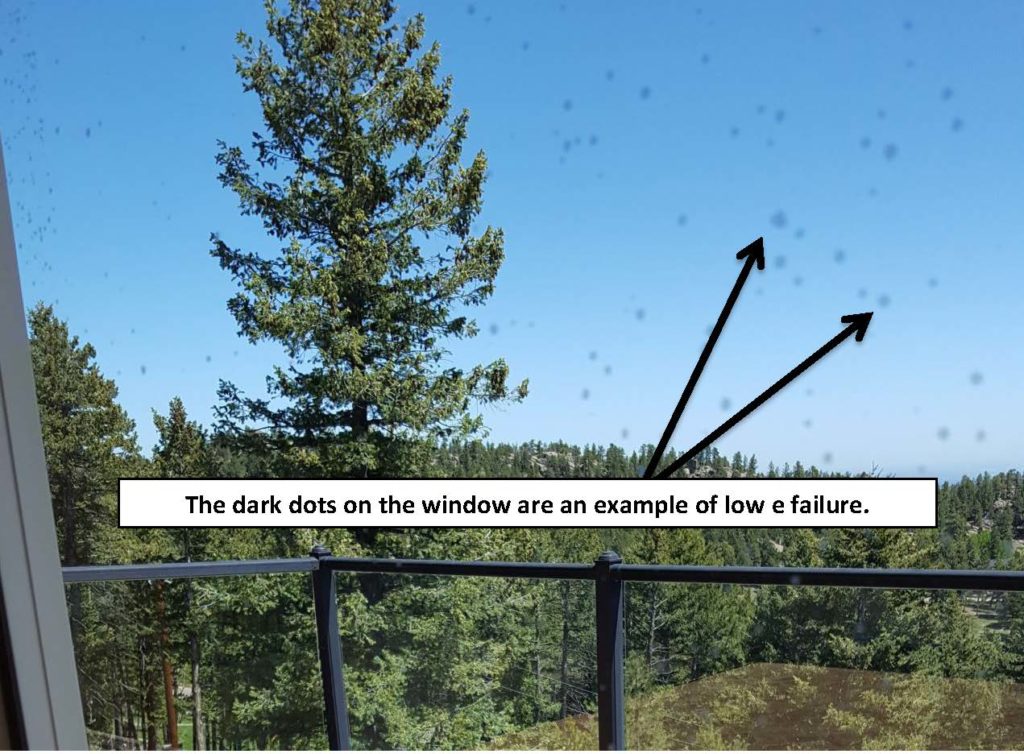
The window cleaner has finished the job and the glass still looks foggy, hazy, has drip marks or even water still on the glass. Terrible work? More likely a broken seal. Most all homes have thermopane windows. Thermopanes have two pieces of glass sandwiched together by a spacer that is usually 1/2” to ¾” thick. This spacer adheres the two pieces together and contains small beads of desiccant. The desiccants job is to prevent the buildup of moisture in between the panes of glass. When the seal “breaks” moisture is allowed to enter the space between the glass and starts to become a visual issue.

Different degrees of failure are easy to spot. A window with a light fog around the edges has just begun to go, but could equally stay the same or get worse. Bad examples can be full blown rain storms in between the panes! If the humidity levels can’t be kept at some sort of equilibrium between the interior and exterior of the home, condensation will form in the thermopane. This is why on a cold wet day things might look worse. The symptoms might not even be apparent on a sunny 70 degree day.

I observe these conditions in about 98% of the homes I do, so you are not alone. I have also noticed that most all window manufacturers have this problem. I strongly suspect that it has to do with our altitude. Windows that are built and sealed together at a much lower altitude have a lot of atmospheric pressure changes to deal with when heading ‘up the hill’. Some are built with small capillary tubes to deal with this. If they are not properly crimped when installed, it is an easy point for air intrusion.

Some windows seem to be more prone to failure than others. Large panes of glass that have site built frames are usually the worst. Add lots of sunlight or exposure to wind and the risk expands significantly. Odd shaped widows are also problematic. However, sliding glass doors seem to be immune to the broken seal. The one thing that will kill a window faster than anything is tint. Window films will not allow heat to pass through the glass. It is like taping a lid on a boiling pot of water, something has to give.

So what are your options?  The problem is visual more than anything. Unless there is a huge amount of water in between, the damage is not bad. It may be ugly to look out but really shouldn’t cause much, if any, harm.  Glass has an insulating value between R-2 and R-6 so no great losses in that area. A few companies offer in place repairs which usually involve drilling a few holes in the glass to “let off some steam”. I’ve seen some improvements with this method. If you have real bad mineral deposits or drips, skip this route. Really all that can be done to fix the problem is replacing the glass. More often than not, just the glass can be replaced. Not having the frame or the whole window assembly can bring the price of replacement back down to earth. The choice is yours, but it is really just visual.

Pine Pollen and Buildup on Windows

This time of year in the mountains, you take a deep breath and the scent of warm pine fills your nose. Springtime in the mountains is a rejuvenating season of new growth and greening. However, mountain residents are familiar with the yellow cloud of dust, PINE POLLEN. Buildup from the pollen gets on everything including your windows!

At Peak Window Cleaning, we have 25 years of experience living with pine pollen. We get all kinds of questions about the pollen, so we are going to answer the most common, like what it is and when does it fly.

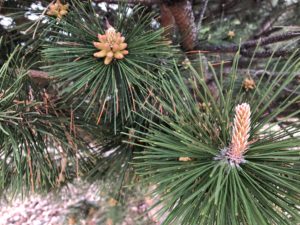
Example of male cones that produce the pollen.

What is the yellow dust? In a nutshell, the yellow dust is apart the fertilization process for Conifers. These ancient trees are Gymnosperms and rather than a typical flower, they have cones. So birds and insects are little help to pollinate. The trees depend on the wind. The trees release a large amount of the yellow dust to increase the chance of pollination.

When does the pine pollen season start? Warm temperatures are the trigger for the process. So in Evergreen, Colorado one can expect when temperatures start to reach above 70°F during the day, which is about mid-June, the pollen will start to fly. The trees will release the most pollen on warm, dry, sunny, and windy days.

Example of male and female pine cones.

When does it end? The length of time the pine pollen flies varieties each year. In the mountain communities, the pine pollen typically flies for about two to three weeks. The dust is usually done by the first few weeks of July.

What makes some years worse than others? It actually depends on the previous season. For example, a very dry year followed by a year of good rain fall, the trees will release a very large amount. In a dry year the trees lay more dormant because of the lack of moisture, as if it knows it has a less likely chance to achieve pollination.

Now that we have answered some of the most common questions about the yellow dust, we hope you will be able to plan for the pine pollen.