Tag Archives: Peak Window Cleaning

Window cleaning with elk

Why Experience Matters In Window Cleaning

Does Experience Count?

What exactly is experience? Doing something right? Doing something well? Doing something safe?

Experience is all of these things and more. I am the owner of Peak Window Cleaning and I have over 33 years of window cleaning experience. You can say that I have been cleaning windows in houses for a long, long time. I’m to the point where I rarely see anything that I haven’t already come across before. Maybe a new style screen tab every 10 years or so!

Having extensive experience is something that I take pride in and pass down to my well-trained crew as well.

I wonder if there are other window cleaners offering their service today that can say the same.

Doing something right doesn’t mean doing it partially or any way possible. Doing something well doesn’t mean I got lucky this time. Doing something safe means everything.

I think of issues that arise on a daily basis. How do I remove paint from a piece of tempered glass without scratching it? Can I remove a metal blind from an ‘80’s style Pella storm window? How do your new Hunter Douglas blinds go up? Which is scratch prone a piece of Guardian, HGP, or Capitol tempered glass? What’s the best way to walk on that tile roof? What will happen if I set up an extension ladder on a composite deck? These are all questions that come up every day and I wonder how many window cleaners actually know the answer or if they just take their chances. BTW, I know the answer, because I’m the guy they call the next time after their last cleaner broke the screen, broke the blind, scratched the glass, etc. It seems like I’ve heard it all in 33 years.

Most of the answers are simple, but they take knowledge that comes with years of experience or being trained the right way. When I conduct interviews to hire new employees, I see the answer first-hand. It is rare to find someone who actually has experience and knows what a piece of tempered glass is, who knows what a waterfed pole is, who knows how to safely remove a screen so it’s not damaged. I am always surprised when someone comes to us with two or more years of “experience” and wasn’t actually trained, but just given a squeegee and told to figure it out. That’s why our training program lasts weeks and months, not hours or days. Our safety program is ongoing, because safety is paramount at Peak Window Cleaning.

Having knowledge, training and experience is the cornerstone of Peak Window Cleaning. Will the other guy know what to do? Use your experience to find the best choice.

We’re happy to announce that Peak Window Cleaning is celebrating 30 years in business!

All the best,

Rob

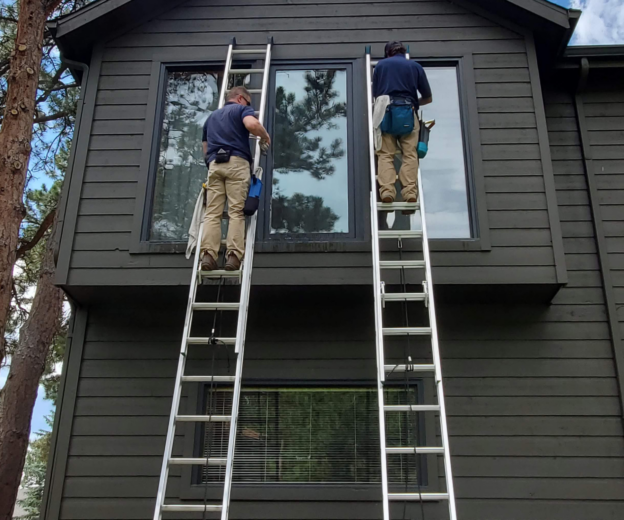
Ladder work requires workers comp insurance

Why Workers’ Compensation Insurance Matters When Hiring a Window Cleaning Company

When homeowners compare window cleaning companies, price is often the first thing they notice. But one of the most important questions you can ask has nothing to do with the upfront cost.

Does the company carry workers’ compensation insurance?

It may not be the most exciting topic, but it can make a huge difference if something goes wrong.

What Is Workers’ Compensation Insurance?

Workers’ compensation insurance provides medical coverage and lost wages for employees who are injured while working. Window cleaning is a physically demanding profession that involves ladders, roofs, uneven terrain, and working at height. Even with proper training and safety procedures, accidents can happen.

When a company carries workers’ compensation insurance, an employee who is injured on your property is covered through the company’s insurance policy.

Why It Matters to Colorado Homeowners

If a window cleaner is injured while working on your property and the company does not carry workers’ compensation insurance, the situation can quickly become much more serious.

Imagine you have hired a window cleaner to clean your windows and while cleaning a window on a roof, they have a misstep getting to the ladder and fall to the ground, breaking a leg. You find out that window cleaner could not afford workers comp insurance, but says that since he is the owner, he isn’t required to have it. That is true for an owner operator. However, he doesn’t carry any other health insurance and now has to cover the cost of his broken leg. He discovers that is also unaffordable, so his best option is to file a claim on your homeowners insurance policy for his broken leg.

In Colorado, an injured worker may seek compensation through the homeowner’s insurance if they are injured while performing work on the property and they do not carry workers’ compensation coverage. These claims do happen and can result in higher insurance premiums, legal expenses, or significant financial consequences depending on the circumstances.

Workers’ compensation insurance is designed to protect both the worker and the homeowner by providing a dedicated source of benefits for work-related injuries. When a professional window cleaning company carries the proper coverage, injuries are generally handled through the company’s workers’ compensation policy rather than involving the homeowner’s insurance.

Hiring a properly insured company helps reduce these risks and provides peace of mind that everyone is protected.

Why Don’t All Window Cleaning Companies Carry It?

The simple answer is cost.

Workers’ compensation insurance is one of the largest insurance expenses for a window cleaning business because the work involves climbing ladders and working at heights. Premiums can be substantial, especially for companies with employees.

Because of this, many smaller companies choose business structures that avoid hiring employees altogether. Some operate strictly as owner operators, while others rely on independent subcontractors instead of employees. If you find this is the case, you will almost always find that they do not have workers comp insurance.

While many owner-operated businesses provide excellent service, it’s still important to understand who is actually performing the work at your home and whether they are properly insured. It only takes one mistake and the cost is substantially more than the cost of coverage, but you may be the one paying it.

New Companies Often Present Greater Risk

Many new window cleaning businesses begin with limited financial resources. Purchasing liability insurance, commercial auto insurance, equipment, and workers’ compensation insurance can be expensive, making it tempting to postpone certain coverages.

At the same time, newer companies typically have less experience working safely around ladders, steep terrain, difficult access, and unique home designs. Like any skilled trade, experience plays a significant role in recognizing hazards and preventing accidents.

That combination of less experience and limited insurance coverage can create additional risk for both the worker and the homeowner.

Ask Before You Hire

Before hiring any window cleaning company, it’s worth asking a few simple questions:

  • Do you carry workers’ compensation insurance?
  • Are the people working at my home employees or subcontractors?
  • Can you provide proof of insurance?
  • Do you also carry general liability insurance?

A reputable company should be happy to answer these questions and provide documentation if requested.

Peace of Mind Is Worth It

Choosing the lowest price isn’t always the least expensive decision in the long run.

When inviting people onto your property to perform work, you want to know they are experienced, properly insured, and committed to safety is one of the best investments you can make.

A professional window cleaning company invests in employee training, safe work practices, quality equipment, general liability insurance, commercial auto insurance, and workers’ compensation coverage. While those investments may increase operating costs, they also help ensure that if an accident occurs, everyone involved is protected.

Before hiring any contractor to work on your property, ask for proof of workers’ compensation insurance. A few extra dollars spent on a properly insured company today could save you from a costly insurance claim tomorrow.

Which is Why We Always Carry Full Coverage Worker’s Comp Insurance

At Peak Window Cleaning, we believe that protecting our customers begins with protecting our team. That’s why we carry comprehensive insurance coverage, including workers’ compensation, general liability, commercial auto, and other business insurance designed to safeguard both our employees and our clients.

Insurance is only part of the equation. We also invest in ongoing safety training, modern equipment, and established procedures that help our technicians recognize hazards, work efficiently, and reduce the risk of accidents. Safety isn’t something we think about only after an incident happens, it’s built into every job we perform.

When you hire a professional window cleaning company, you’re not just paying for clean windows. You’re investing in experience, accountability, and the peace of mind that comes from knowing the company working on your home is committed to doing the job safely and responsibly.

Pine Pollen Contributes to Dirty Windows

Why Mountain Homes Get Dirtier Windows Than City Homes

Most people assume that city homes have the dirtiest windows because of traffic, pollution, and crowded streets.

The truth might surprise you.

Here in the Colorado foothills and mountain communities, windows often get dirty much faster than those in urban areas. While we enjoy cleaner air, beautiful scenery, and abundant wildlife, mountain living comes with its own unique challenges when it comes to keeping windows clean.

If you’ve ever wondered why your windows seem dirty again shortly after they’ve been cleaned, you’re not imagining things. Here are some of the biggest reasons mountain homes face a constant battle against dirty windows.

Pine Pollen: Nature’s Yellow Dust Storm

Every spring, pine trees release massive amounts of pollen into the air. Unlike the lighter pollen produced by many flowering plants, pine pollen is heavier and often settles directly onto homes, vehicles, decks, and windows.

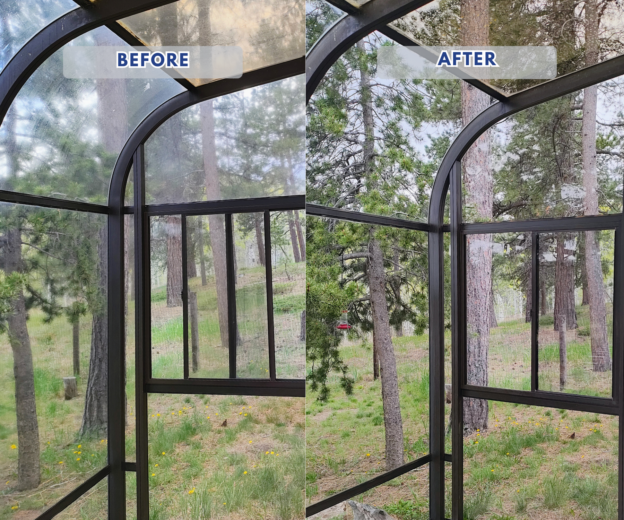
Many homeowners are surprised by how quickly clean windows can develop a yellow-green film during pollen season. The problem is even worse after a light rain, which can cause pollen to stick to the glass and leave behind visible spotting.

While pollen is a natural part of mountain living, regular cleaning helps prevent buildup and keeps your views crystal clear.

Wind-Blown Dust Travels Farther Than You Think

Mountain winds are no joke.

Even if you don’t live on a dirt road, wind can carry dust, dirt, and debris for miles. Open spaces, construction projects, hiking trails, and dry conditions all contribute to airborne dust that eventually lands on your windows.

Many foothill homeowners notice that windows exposed to prevailing winds tend to get dirty much faster than protected areas of the home.

Wildlife Leaves More Than Footprints

One of the joys of mountain living is seeing deer, elk, birds, foxes, and other wildlife right outside your window.

Unfortunately, wildlife often leaves behind evidence of their visits.

Bird strikes can leave feathers and marks on glass. Insects collect around windows and exterior lighting. Spiders love to build webs around window frames, especially in sheltered corners and under eaves.

These natural visitors contribute to the buildup that many mountain homeowners constantly battle.

Snow, Ice, and Spring Melt Leave Residue

Winter weather may look clean and beautiful, but it can be surprisingly hard on your windows.

Snow and ice often contain dust, minerals, and environmental debris. As they melt, they leave behind residue on the glass. Repeated freeze-thaw cycles can also contribute to spotting and buildup around frames and tracks.

By spring, many homeowners are surprised by how much grime accumulated during the colder months.

Trees Create Constant Debris

Mountain homeowners are fortunate to be surrounded by beautiful trees, but those trees work year-round to dirty your windows.

Pine needles, sap mist, leaves, seed pods, and organic debris all find their way onto glass and screens. Trees also provide ideal environments for insects, which means more bug spots and spider webs around windows.

Homes located in heavily wooded areas often require more frequent maintenance than homes with fewer surrounding trees.

Cleaner Air Doesn’t Always Mean Cleaner Windows

One common misconception is that cleaner mountain air automatically means cleaner windows.

While mountain communities generally have less industrial pollution than large cities, nature is constantly producing its own debris. Pollen, dust, insects, tree sap, and weather-related residue often create just as much buildup as urban pollution, sometimes more.

The difference is that mountain dirt is natural, but it’s still dirt.

Protecting Your Investment

Windows are one of the most expensive and important features of your home. Regular cleaning does more than improve curb appeal and brighten your views.

It also helps:

  • Prevent long-term mineral staining
  • Reduce buildup that can damage screens and tracks
  • Improve natural light inside your home
  • Allow early detection of damaged seals, screens, and frames
  • Protect the beauty and value of your home

Enjoy the Views You Live Here For

Most people choose mountain living because of the incredible scenery. Whether it’s a sunrise over the foothills, wildlife in the yard, or fresh snow on the pines, those views are part of what makes living here special.

Unfortunately, pollen, dust, and mountain debris can slowly hide the very scenery you moved here to enjoy.

Regular window cleaning helps ensure you’re seeing Colorado’s beauty, not the layer of dirt that nature leaves behind.

At Peak Window Cleaning, we understand the unique challenges mountain homeowners face because we live and work here too. From pine pollen to wind-blown dust, we know what it takes to keep mountain views looking their best all year long.

What Happens When Windows Go Too Long Without Professional Cleaning?

Windows are one of the largest investments in your home, yet they’re often one of the most overlooked when it comes to regular maintenance.

Most homeowners think about window cleaning as a way to improve their view, but routine professional cleaning does much more than that. Over time, dirt, minerals, pollen, hard water, and environmental debris begin to build up on the glass and surrounding window components.

The longer that buildup sits, the harder it becomes to remove and the greater the risk of permanent damage.

Here is what can happen when windows go too long without professional cleaning.

Dirt Becomes More Than Dirt

At first, dirt on a window is mostly a cosmetic issue.

Over time, however, dust, pollen, tree sap, bird droppings, and mineral deposits begin to bond with the glass surface. What starts as a light layer of grime can eventually become difficult to remove through normal cleaning methods.

The longer this buildup remains on the glass, the more opportunity they have to leave stains and residue behind.

Hard Water Stains Can Become Permanent

One of the most common issues we see is hard water staining.

Sprinkler systems and house washing are usually the biggest culprits. When groundwater containing minerals repeatedly dries on glass, it leaves behind deposits that build up over time.

If these spots are cleaned promptly, they are often easy to remove.

When left untreated for months or years, the minerals can begin to etch into the glass itself. At that point, cleaning alone may not restore the window’s original appearance.

In severe cases, the damage can only be corrected through glass restoration or replacement.

Window Screens Become Clogged

Screens act like filters for your home.

Over time they collect dust, pollen, cobwebs, insects, and airborne debris. As buildup increases, airflow decreases and your view becomes less clear.

Many homeowners are surprised by how much brighter their home feels after having screens professionally cleaned.

Clean glass helps, but clean screens make a huge difference too.

Tracks and Sills Collect Debris

Window tracks are often overlooked until a problem develops.

As dirt, leaves, insects, and moisture accumulate, tracks can become difficult to clean and windows may not operate as smoothly.

In some cases, trapped moisture can contribute to mold growth or damage to surrounding materials.

Routine cleaning helps keep everything functioning properly and allows potential issues to be spotted early.

Natural Light Is Reduced

One of the biggest benefits of clean windows is also one of the easiest to overlook.

Dirty windows block natural sunlight.

As layers of dust and grime build up, less light enters your home. Rooms can feel darker, views become muted, and the overall appearance of your home suffers.

Many homeowners are amazed at how much brighter their living spaces feel after professional window cleaning.

Small Problems Go Unnoticed

Professional window cleaning often reveals issues homeowners have not yet discovered.

During cleaning, damaged screens, failed seals, cracked glass, deteriorating caulking, and other concerns become easier to identify.

Finding these problems early can save money and prevent larger repairs down the road.

Curb Appeal Suffers

Whether you plan to sell your home or stay for years, clean windows contribute significantly to curb appeal.

Dirty windows can make an otherwise well maintained property appear neglected.

Clean windows enhance the appearance of your home both inside and out and help showcase the beauty of your property.

The Cost of Waiting

Many homeowners delay window cleaning because the glass does not seem “that bad.”

Unfortunately, the longer mineral deposits, dirt, and other buildup remain on the surface, the more difficult and costly they can become to address. 

Regular professional cleaning helps preserve your windows, maintain your home’s appearance, and protect your investment.

Think of it like changing the oil in your vehicle. Preventative maintenance is almost always less expensive than repairing damage after it occurs.

Clear Views and Long Lasting Windows

Your windows are one of the largest and most valuable features of your home. They provide natural light, beautiful views, and protection from the elements.

Keeping them professionally cleaned is about more than appearance. It is about preserving the life of the glass, protecting your investment, and enjoying your home to its fullest.

A little maintenance today can help prevent costly problems tomorrow and ensure that your windows continue to look their best for years to come. Give Peak a call today!

Why insurance is important in window cleaning

The Importance of Insurance in Window Cleaning

When you hire a window cleaning company, you’re not just paying for shiny glass, you’re trusting someone with one of the most expensive things in your home or business. Windows today are far more complex with many different types of glass and coatings, and the risks involved are real.

That’s why full insurance coverage isn’t optional. It protects the window cleaner, and it protects you, the home or business owner.

Let’s see why it matters.

General Liability Insurance: Protecting Your Property

General liability insurance covers accidental property damage or bodily injury caused during the job.

Even experienced technicians can have accidents. A ladder can shift. A tool can fall. Without liability coverage, the homeowner may be forced to file a claim on their own policy, or worse, pay out of pocket.

Proper liability insurance ensures:

  • Accidental property damage is covered.
  • Medical costs are handled if someone is injured.
  • The homeowner isn’t pulled into a legal or financial mess.

Errors & Omissions (E&O) or Care, Custody & Control: When the Glass Itself Is Damaged

This is where things get serious.

Professional window cleaners are expected to understand different types of glass and how they respond to cleaning methods. Not all glass is created equal.

For example:

  • Tempered glass can have fabrication debris that makes it prone to scratching.
  • Low-E coated glass requires specific tools and techniques.
  • Older glass can be fragile or uneven.
  • Construction debris removal requires specialized knowledge and care.

A trained professional should know:

  • When a scraper is safe to use and when it is not.
  • How to test glass before cleaning.
  • How to identify manufacturer defects that could lead to scratching.
  • How to adjust technique based on the surface.

If someone lacks that knowledge and scratches multiple panes, the cost can be staggering. One large piece of glass can cost thousands of dollars to replace, often more than a window cleaner earns in an entire week. Damage to several panes can quickly climb into five figures.

Here’s the critical issue:

If the company does not carry proper Errors & Omissions or Care, Custody & Control coverage, their insurance company may deny the claim because the glass was “being worked on by a professional” at the time of damage.

That can leave:

  • The window cleaner unable to afford the repair.
  • The homeowner stuck with thousands of dollars in replacement costs.
  • A stressful legal dispute over who is responsible.

This type of coverage specifically protects against damage to the property being serviced. Without it, you are exposed.

Workers’ Compensation: Protecting You From Injury Claims

Window cleaning involves ladders, roofs, and physical labor. Falls and injuries can happen.

If a company does not carry workers’ compensation insurance and a worker is injured on your property, the injured employee may pursue compensation through your homeowner’s insurance.

Workers’ comp ensures:

  • The employee’s medical bills are covered.
  • Lost wages are covered.
  • The homeowner is protected from liability claims.

Professional tip: Not many window cleaners have this insurance because it is really expensive! They get around it by paying their technicians as contractors instead of employees. Always ask if they have Workers Comp insurance for your own protection. 

Commercial Auto Insurance: Covering Business Vehicle Risk

If a company drives from job to job, they need commercial auto insurance, not just personal auto coverage. In fact, if they don’t have commercial auto and the insurance company finds out they were actually using the vehicle for business, they will deny the claim. That creates major financial exposure.

Commercial auto protects:

  • Damage caused by company vehicles.
  • Injuries related to vehicle accidents.
  • The company’s ability to handle claims properly.

The Reality: Not All Insurance Is Equal

Some companies carry minimal coverage. Some carry policies that exclude key protections. Some carry none at all.

If a claim is filed and coverage is inadequate, the insurance company will deny it. They are contractually obligated to follow the policy, not to “do the right thing.”

That denial can mean:

  • Thousands of dollars in unrecovered damage.
  • Lengthy disputes.
  • Homeowners left paying for repairs.

Windows are one of the most expensive exterior components of a home. Replacing custom or large-pane glass is not cheap. And most small operators cannot afford to personally cover large-scale glass replacement.

It’s Up to the Homeowner to Verify Protection

Before hiring a window cleaning company, ask for:

  • A current certificate of insurance.
  • Proof of general liability.
  • Confirmation of Care, Custody & Control or E&O coverage.
  • Proof of workers’ compensation.
  • Proof of commercial auto insurance.

A professional company will provide it without hesitation.

If a company avoids the question or minimizes the importance of insurance, that’s a red flag. 

That is why we include it with every estimate. We want you to know, we are fully covered, for both your and our peace of mind. 

The Bottom Line

A professional window cleaner isn’t just responsible for making your glass sparkle — they are responsible for understanding the materials they are working on and protecting them properly.

Full insurance coverage protects:

  • Your property.
  • The technicians.
  • The company.
  • Your financial security.

When comparing quotes, remember: lower prices often reflect lower overhead, and insurance is one of the largest overhead expenses in this industry.

The cheapest bid can quickly become the most expensive mistake if something goes wrong.

Peace of mind is worth protecting.

March Home Exterior Checklist

A Simple Way to Get Ahead Before Spring Goes Full Speed

March is that awkward in-between month.

One day it feels like winter. The next day the sun is blazing through your windows like it’s mid-April… and suddenly you’re noticing everything on the glass. 

Before pollen season kicks in and your weekend calendar fills up, this is the perfect time for a quick exterior reset.

Here’s your simple March checklist to get ahead of the game.

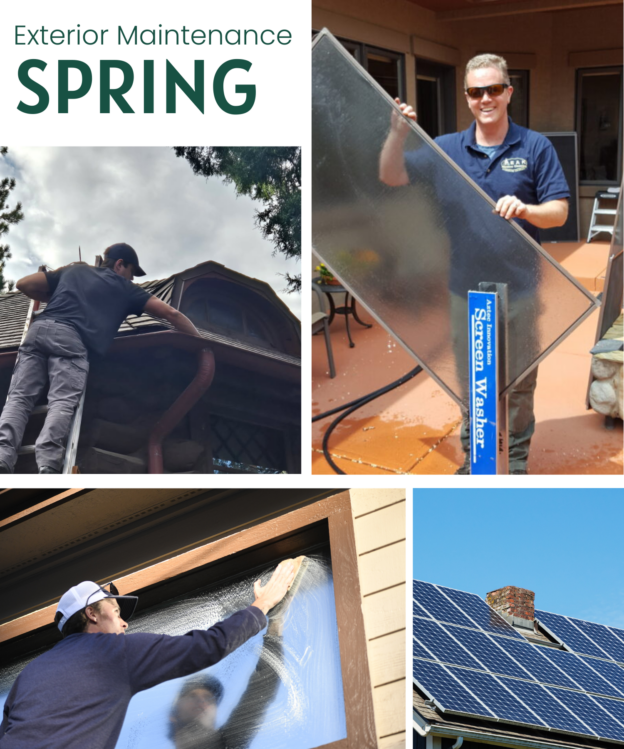
1. Wash Off Winter Window Grime

Winter leaves its mark. Even if you don’t see it right away, your windows have been collecting:

  • Wind-blown dust
  • Hard water spotting
  • Snow and ice residue
  • Mineral buildup
  • Screen debris

Then March sunshine hits… and surprise! Every streak shows up.

Cleaning your windows now:

  • Lets in more natural light
  • Helps prevent pollen from sticking
  • Instantly brightens your home
  • Protects the life of your glass

Don’t skip the screens. Even clean glass looks dull behind dusty screens. And if you’re planning to open windows soon, you don’t want that debris blowing inside.

2. Clean Out Tracks & Sills

Before you crack the windows open on that first warm day, check the tracks.

Winter moisture often leaves behind:

  • Dirt buildup
  • Dead bugs
  • Mud
  • Beginning mold

A quick vacuum and wipe-down keeps things sliding smoothly, and keeps grime from blowing into your home.

3. Inspect Screens for Tears

Now’s the time to check for:

  • Small holes
  • Loose frames
  • Bent corners
  • Warping

It’s much easier to fix screens now than discover a problem once the bugs arrive.

Future you will be grateful.

4. Check Gutters Before Spring Rains

Snow melt + spring storms = overflow if gutters are clogged.

Make sure:

  • Pine needles and leaves are cleared out
  • Downspouts drain away from your foundation
  • No winter damage needs attention

March is your calm-before-the-storm moment.

5. Give Siding a Light Rinse

A gentle rinse removes:

  • Road salt residue
  • Dust buildup
  • Cobwebs
  • Winter grime

You don’t have to go full pressure wash mode yet, just freshen things up so your home feels ready for the new season. But avoid your windows, and if you do get water on them, make sure to clean them right after to avoid hard water stains.

6. Check Solar Panels (If You Have Them)

Winter debris and dust reduce efficiency. As sunshine hours increase, clean panels mean better performance and a better return on your investment.

Why March Is the Sweet Spot

March is early enough to:

✔ It’s still months before peak pollen
✔ Avoid the spring service rush
✔ Prevent grime from baking onto glass
✔ Feel ahead of spring cleaning instead of behind

It’s a small effort now that makes a big difference once spring hits full stride.

A Friendly Reminder Before the Spring Rush

Every year, once the weather consistently warms up, schedules fill quickly. The first real stretch of sunny days tends to flip the switch for everyone at once.

If you’re already thinking, “Yep… our windows need it,” this is the ideal time to get on the calendar before the true spring rush hits.

No pressure, just planning ahead.

At Peak Window Cleaning, we love helping homeowners head into spring with crystal-clear glass, fresh screens, and sunlight that actually sparkles instead of highlighting streaks.

Because nothing feels better than that first bright spring day shining through spotless windows.

Ready to roll into spring?

Pets, Dry Winter Air, and Dusty Windows in Mountain Homes

Winter in the mountains means more time indoors for everyone, especially our pets. More couch cuddles, more window watching, and yes, more nose prints on the glass. If your interior windows are looking dusty or smudged no matter how often you wipe them, you are not alone.

This is one of the most common winter issues we see in mountain homes.

Why Pets Make Winter Window Buildup Worse

When pets are indoors most of the day, they naturally release fur, dander, and oils into the air as they move around. Those particles do not just land on floors or furniture. They float, circulate, and stick to smooth surfaces like interior windows and glass doors.

Add in the classic nose-on-the-glass move, a few paw smudges, and fur collecting in window tracks, and your windows start to show it fast. This is especially noticeable in homes with big windows and lots of winter sunlight.

Dry Air and Static Electricity Are Sneaky

Mountain winters are dry, and indoor heating dries the air out even more. That dry air creates static electricity, which basically turns your windows into dust magnets.

Instead of dust falling away, it clings to the glass. That is why windows can look dirty again shortly after being wiped, even when you just cleaned them.

If you have pets, that static effect pulls pet hair and dander right back onto the glass.

Why February Is the Tipping Point

By February, homes have been closed up for months. Pets have been inside more, heaters have been running nonstop, and dust has had time to build up. On top of that, the winter sun sits lower in the sky and shines right across your windows, highlighting every smudge and streak (and unfortunately, defects).

Suddenly, the windows you were ignoring all winter are impossible to unsee.

How We Can Help 

A professional interior window cleaning removes the oils and residue that regular wiping leaves behind, which helps reduce static and keeps glass cleaner longer. Cleaning window tracks also removes pet hair and debris that continue to circulate through the home.

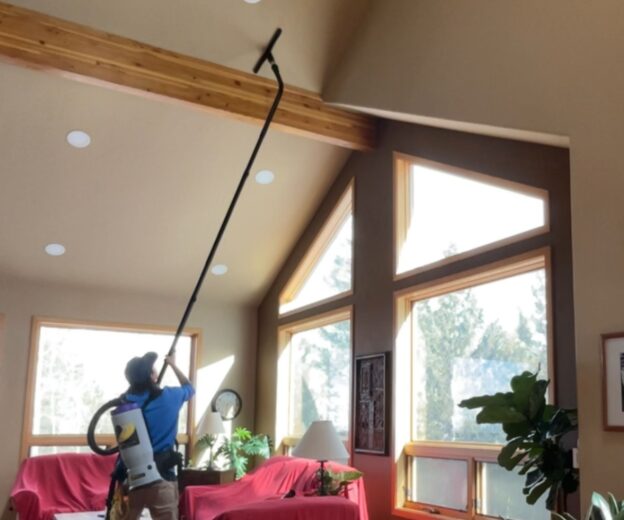
High interior areas matter too. Pet hair and dust do not stay at ground level. They collect on ceiling fans, beams, ledges, and high trim, especially when heating systems are running. Professional high interior vacuuming and dusting safely removes that buildup, helping keep dust from falling back down onto freshly cleaned surfaces and improving overall air quality.

Most of our winter customers tell us the same thing. They did not realize how much it would improve the feel of their home until the windows and high areas were clean again.

Before Spring

If your pets have been enjoying their favorite window views a little too much this winter, February is a great time to refresh your interior windows and high surfaces.

Just a simple reset to let more light in and enjoy those mountain views again before spring mud and pollen arrive.

When you are ready, we are happy to help.

High Interior Residential Cleaning

Start the Year Clean

The Often-Forgotten Areas in Your Home

When most homeowners think about cleaning, they picture floors, countertops, and maybe the windows they walk past every day. But as we start a new year, it’s worth looking up, literally.

January is the perfect time to reset your home, and some of the most important areas are the ones that rarely get attention during regular cleaning routines. These high and hidden spots quietly collect dust, debris, and cobwebs all year long.

Here are some of the most commonly forgotten areas we see in homes and why addressing them now can make a noticeable difference.

Ceiling Fans and Light Fixtures

Ceiling fans are one of the biggest dust collectors in a home. Over time, dust builds up on the blades and gets recirculated every time the fan is turned on. Light fixtures and chandeliers collect dust and grime as well, dulling their appearance and reducing light output.

During winter, when homes are closed up and heating systems are running, that dust has nowhere to go but back into your living space.

Vaulted Ceilings, Beams, and Rafters

Homes with vaulted ceilings or exposed beams look beautiful and open, but they also provide the perfect place for dust and cobwebs to collect unnoticed. Because these areas are out of reach, they’re often left untouched for years.

Winter is an ideal time to address them while outdoor allergens are low and before spring cleaning begins.

Stairwells

Stairwells are some of the most challenging areas for homeowners to clean safely. These spots often get skipped altogether because of ladder height and awkward angles.

Professional high interior cleaning allows these areas to be cleaned thoroughly without the safety risks of climbing ladders or balancing on stairs.

Why Winter Is the Right Time

The start of the year brings a natural desire for a clean slate. With homes sealed up for winter, dust and indoor air quality become more noticeable. Tackling these overlooked areas now sets your home up for a cleaner, healthier year ahead and makes spring cleaning far less overwhelming.

A Clean Start from Top to Bottom

High interior cleaning isn’t just about appearances, it’s about addressing the parts of your home that normal cleaning can’t reach. Starting the year by taking care of these often forgotten areas helps your home feel lighter, brighter, and truly clean.

If you’ve been meaning to take care of the high and hard-to-reach areas in your home, January through March is the perfect time to do it.

How to Check Your Windows and Doors for Drafts Before Winter

Don’t let the chill in!

Fall is here and so is the chill in the air! Don’t let that chilly breeze sneak in through your windows or doors. Drafty windows and doors not only make your home uncomfortable, they also send your heating bill soaring. Luckily, with a little time and a few simple tools, you can inspect and seal your windows and doors to keep your home warm and cozy all winter long.

Here’s how to do it.

Check for Drafts and Damage

Start by looking closely at each window and exterior door and check for anything that might let air leak through.

Look for:

  • Cracks or gaps in the frame or trim
  • Peeling paint or soft, rotting wood (especially on older windows)
  • Drafts around the edges or corners
  • Windows that don’t close tightly or doors that don’t latch snugly. Wood windows are especially prone to warping in our dry climate, so check carefully. 

Quick test: On a breezy day, light a candle or incense stick and slowly move it around the edges of your window or door. If the flame flickers or smoke moves, air is coming in.

If you find major issues like cracked glass, warped frames, or serious rot, you may need to call in a pro. But for small gaps and worn seals, you can easily fix those yourself.

Check the Weatherstripping

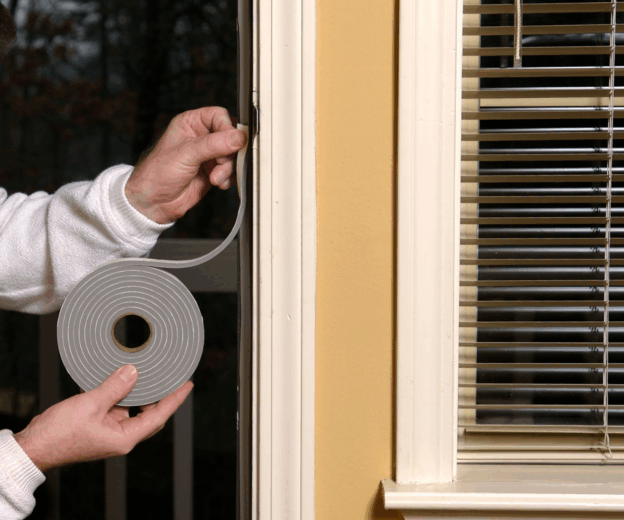
Weatherstripping is that flexible rubber or foam material that seals the space between the door or window and the frame. Over time, it gets worn down, cracked, or flattened which means cold air can slip right through. You’ll need to open your windows and doors and look at your weatherstripping to see if it needs to be replaced. Don’t forget to look at the top of the door or window. It should have some puffiness to it, to fill the gap. If it’s flat or cracked, it’s time to replace it. 

Here’s how to replace it:

  1. Remove the old strip. Gently peel it off and clean away any leftover adhesive or debris.
  2. Clean the area. Use soap and water or rubbing alcohol, and let it dry completely.
  3. Cut new weatherstripping to size. You can find it at any hardware store in either foam, rubber, or vinyl.
  4. Stick it on. Apply the new strip evenly along the frame, pressing firmly to make sure it sticks.
  5. Close your window or door a few times to make sure it seals snugly without making it hard to open or close.

Seal Up the Gaps

Even with fresh weatherstripping, small cracks around window and door frames can still let cold air in. That’s where caulk comes in handy.

What to do:

  • Use exterior caulk for outdoor gaps (like where siding meets the window frame).
  • Use interior caulk for inside cracks around trim or molding.
  • Smooth the bead with your finger or a caulking tool for a clean finish.

Tip: Add a door sweep to the bottom of exterior doors to block drafts, they’re inexpensive, easy to install, and make a big difference.

Add a Little Extra Insulation

If your windows still feel cold after sealing, try one of these simple upgrades:

  • Thermal curtains
  • Draft stoppers
  • Storm doors

These extra touches can make your home feel instantly warmer.

Stay Warm and Save Energy

Taking an afternoon to inspect and seal your windows and doors is one of the easiest ways to prepare your home for winter. You’ll notice fewer drafts, a cozier living space, and maybe even a lower heating bill.

So grab your weatherstripping and caulk gun, put on some comfy clothes, and get your home winter-ready. You’ll thank yourself!

Fall Gutter Cleaning Is a Must Before Winter Hits

Being surrounded by pine and aspen trees that are beautiful to look at, but when the needles and leaves end up in your gutters, gutter cleaning becomes a necessity. Pine needles are especially good at clumping together and getting in all the nooks and crannies. Combine that with falling leaves, and you’ve got a recipe for winter damage if your gutters aren’t cleared in time.

Why Clean Gutters Before Winter?

Prevent Ice Dams

When gutters are packed with pine needles and leaves, water can’t flow properly. As temperatures drop, trapped water freezes, creating ice dams that push moisture under your roof, leading to interior leaks and damage.

Avoid Gutter Damage

Pine needles are lightweight but dense. When soaked and frozen, they add surprising weight to your gutters. That extra stress can cause gutters to sag, warp, or detach from the house.

Protect Your Foundation

Clogged gutters overflow and water collects around your home’s foundation. Once frozen, that water expands, potentially causing cracks and structural issues.

Tips for Cleaning Gutters with Pine Trees Around:

  • Use a narrow gutter scoop or gloved hands to remove pine needles (they wedge in tight!).
  • Flush the gutters with a hose to remove fine debris and check for clogs.
  • Check the downspouts, pine needles are notorious for forming tough clogs here.
  • Trim back overhanging pine branches if possible.

Taking care of your gutters now, especially in areas with lots of trees, can save you major headaches when winter sets in. A clean gutter is a happy gutter, and your roof and foundation will thank you.

Don’t want to climb ladders or wrestle with wet pine needles? Call us before your gutters freeze, we’ll take care of it for you.